Today we let discussing about the short answer is no; rabbits must be not eating cashews.
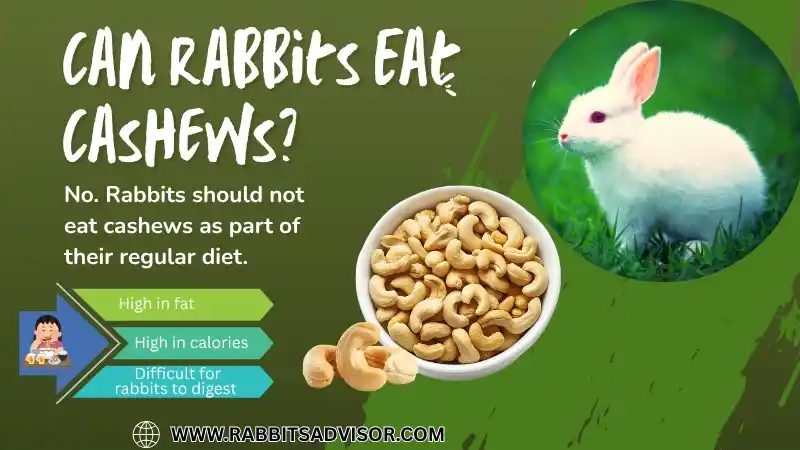
Spend a tiny nibble might not create instant harm, cashews offer totally no nutritional benefit to rabbits and pose few possible health risks due to their high fat and carbohydrate content.
Are Cashews Safe for Rabbits?
Now we talk about this section plain cashews usually remain nontoxic for healthy adult rabbits. But safety depends totally upon serving size and feeding frequency. One tiny piece event times usually causes fewer digestive concerns.
Also Read: Can Rabbits Eat Bamboo? Leaves, Sticks, Shoots, & Facts
But frequent feeding creates extra health risks over longer periods. Salted cashews must be never entering your rabbit’s feeding routine. Roastedtypes of many contain oils, seasonings, and extra additives.
As we know element may harm your rabbit’s digestive system significantly. Therefore, choose plain, raw cashews only if offering any piece.
Why Cashews Are Bad for Rabbits?
Now we let discussing primary reason why cashews are improperlikerabbit’s lies in their high fat and carbohydrate content. These components are difficult for a rabbit’s digestive system to process and can lead to various health complications.
High Fat Content
Now we talk about this point cashews are rich in fats, it is not easily absorbed by rabbits. This can disrupt the fine balance of bacteria in their gut, main to dysbiosis and clearlycreatingdiarrhea or other digestive issues. Furthermore, extreme fat intake contributes to size, which can totally shorten a rabbit’s lifespan and increase their sensitivity to other diseases.
High Carbohydrate Content
Let we start the rabbits needs few carbohydrates like energy; the amount found in cashews is far too high. Extra carbohydrates can lead to and produce of harmful bacteria in the gut, again give to dysbiosis and absorb problems. This can also lead to cecal dysbiosis, where the cecum imbalanced.
Lack of Nutritional Value
Let we discuss in this Point Cashews offer virtually no nutritional benefits to rabbits.
Also Read: Can Rabbits Eat Honeydew Melon? Rind, Skin, Seeds, & Leaves
They do not provide the important fiber, vitamins, or minerals needs like a healthy rabbit diet. First, they offer empty calories that can give to weight gain and other health problems.
Potential for Choking
Let us discussing in this section less of a treat than the nutritional risks, the hard texture of cashews must be present a choking hazard, very like smaller rabbits or those who go to eat quickly.
Nutritional Breakdown of Cashews vs. Rabbit Dietary Needs
Let we start here this Looking at the numbers side by side makes it clear why cashews are such a poor fit for rabbits. The table below compares the important nutrients in 100 grams of raw cashews next what a rabbit’s diet must be look like.
| Nutrient | Cashews (per 100g) | Ideal Rabbit Diet |
| Fat | 43.8g | 1 to 3% of total diet |
| Fiber | 3.3g | 20 to 25% minimum (from hay) |
| Starch | 23.5g | Minimal, from pellets only |
| Protein | 18.2g | 12 to 14% of total diet |
| Sugar | 5.9g | Very low, from occasional treats |
| Calcium | 37mg | Moderate (excess causes bladder sludge) |
The mismatch is stark. Cashews savealmost 44 gm of fat spacegiving only 3.3 grams of fiber. A rabbit consume cashews is getting the exact different of what its body needs.
Are Roasted Cashews Better?
As we know a few people believe roasted cashews might become safer after cooking. Sadly, roasting does not improve their nutritional value like rabbits. In fact, many roasted cashews take added salt, oils, and flavors.
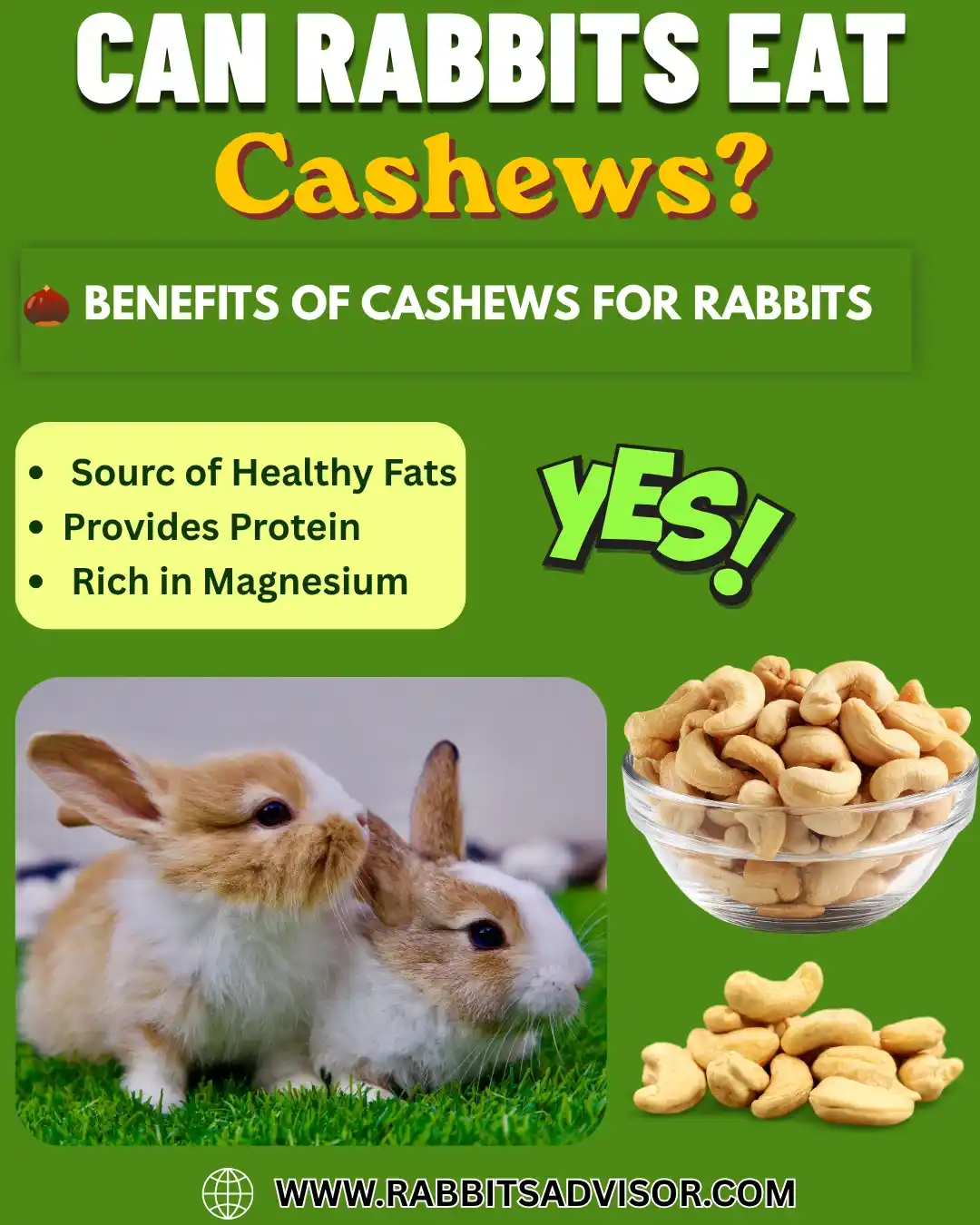
This factor may create also health risks like rabbits. So, avoid roasted, salted, flavoured, or spicy cashews completely.
Can Baby Rabbits Eat Cashews?
As you know thatbaby rabbits need even greater nutritional care than adult rabbits. Their digestive systems continue developing in the first months of life. So, they need hay, mother’s milk, quality pellets, and safe vegetables.
Also Read: Can Rabbits Eat Eggs? Shell, Boiled, Raw, & Scrambled
Cashews offer no nutritional benefit like growing rabbits. First, they increase unnecessary health risks. So, never feed cashews to baby rabbits.
Better Treats for Rabbits
As we know luckily, many healthy treats provide very good nutrition and tastyflavour.
We are selecting these safer alternatives:
- Small apple slices without seeds
- Blueberries
- Strawberries
- Banana slices occasionally
- Fresh cilantro
- Parsley
- Basil
- Romaine lettuce
- Bell peppers
- Carrot tops
We have always introduced new foods slowly and offer small parts.
Healthy Feeding Tips
As we know every rabbit owner must befollowing healthy feeding habits always.
Also Read: Can Rabbits Eat Honeysuckle? Leaves, Flowers, Plants, & Seeds
- Must be supplied unlimited fresh hay every day
- Offer fresh vegetables in appropriate portions
- Save and clean water available all over the day
- Limit commercial pellets according to your veterinarian’s advice
- Give fruit only as an occasional treat
- Avoid processed human foods completely
- Monitor your rabbit’s weight regularly
- Schedule routine Pet doctor checkups for long term health.
FAQs (Frequently Asked Questions)
Summing Up
Today we have discussed in this article, Cashews may be tempting to give as a treat but note that they are not suitable for rabbits.
Also Read: Can Rabbits Eat Okra? Leaves, Seeds, Pods, & Stem
As we know caregivers, we must organize our pets’ health over their momentary enjoyment.
Your rabbit can lead a healthy and happy life with a hay rich diet increase by safe vegetables and fruits.
In this point is very important you always ask your vet if you are unsure about introducing new food to your rabbit’s diet. Your bunny’s health and happiness depend on it.
If this article is valuable for you, then please share it along with your friends, family members, pet lovers or relatives over social media platforms like as Facebook, Instagram, Linked In, Twitter, and more.
Do you have any experience, tips, tricks, or query regarding on this? You can drop a comment!
Have a Nice Day!