Do you have a dream the big and fluffy rabbit as a pet in your family, then Giant Angora rabbit is best one. If we talk about their breeds, then they are developed from the Angora rabbit that is one of the oldest breed of rabbits.
For your knowledge, your loving Giant Angora Rabbit was created by making breed with Flemish Giants and French Lops. Once done successfully, The American Rabbit Breeders Association (ARBA) officially permitted this breed, in 1988.
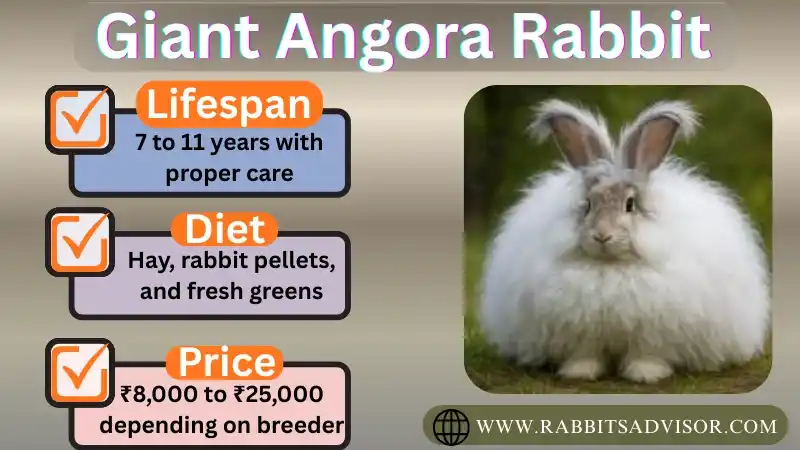
As the big size, Giant Angora has to need big space and lots of time to explore. They can also be keeping as a house rabbits too. Let’s guide to everything about these giant fluffy rabbits.
Giant Angora Rabbit – Overview
| Lifespan | 7–11 years |
| Size | Giant |
| Similar Breeds | English Angora , French Angora, and Cashmere Lop |
| Weight | Over 9 lbs, no max weight |
| Temperament | Gentle, intelligent, friendly |
Giant Angora Rabbit Breed History/Origin
The American Rabbit Breeders Association (ARBA) only recognized only two types of Angoras for many years like as French and English. This is because; other types were not considered different enough as a separate breed.
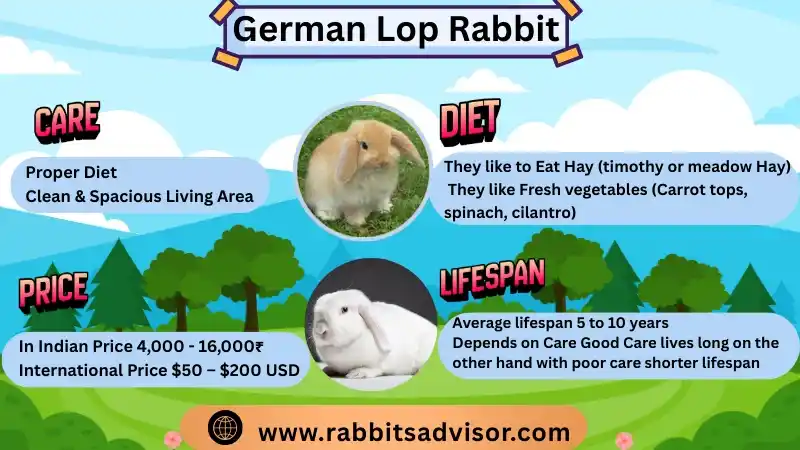
Also Read: German Lop Rabbit and its Lifespan, Size, Diet, Care, and Facts
Louise Walsh from Tauton Massachusetts had a great vision to create a bigger breed of Angora that can be different from the others. Walsh breeds German Angora with larger commercial breeds and created an all-white rabbit.
That rabbit is with some fun on ear and head especially with good-quality wool. The Giant Angora officially recognized by ARBA in 1988.
Giant Angora Rabbit Characteristics
Angora rabbits are as similar the tiny stuffed bunnies’ cause of their long, thick fur and curly undercoat. The English Angora, French Angora and Giant Angora are especially well-famous and loved.
There are other breeds also like German Angora, the Satin Angora, the Japanese, Russian, Finnish, Chinese, Korean and Swiss Angora.
Some long-haired rabbits are including the Fox, Dwarf Fox and Jamora rabbits. Others with long hair like Lionhead rabbits and Bearded Rabbits.
Giant Angora Appearance & Personality
As the researched report, Giant Angora rabbit comes in the biggest of all other breeds of Angora. Usually, these rabbits are in weigh around 9.5 and 10 lbs.
Also Read: Giant Chinchilla Rabbit and its Lifespan, Diet, Care, Size, & Facts
They have a large oval shaped head which is wide on the forehead and a little narrower at the muzzle.
These rabbits have forehead tufts and cheek fur, long and up-straight ears.
Giant Angora Rabbit Types
English Angora: The English Angora is among all Angora rabbits is the smallest and lightest. It’s also having the thick and wooly fur all over on their body except their nose and front paws.
French Angora: French Angora rabbit’s tufts on their ears are not so long and special like other Angora rabbits. The fur on their face, front and back paws is short and different from the others.
Giant Angora: The Giant Angora has three kinds of fur like curly undercoat, type of fuzzy layer with straight ends that is between the undercoat and the kemp, and last straight kemp. A healthy Giant Angora’s weigh are at least 12 pounds (5.5 kg).
Giant Angora Rabbit Color
The Angora rabbit’s coat can come in many colors. The color of your Angora will be depending on the color of their group. These groups are known as the agouti group, white group, broken group, shaded group and self group.
Their most common colors are usually white, black, blue, chocolate, blue tort, black tort, chocolate, tort and chestnut. Although ARBA accepted only one color that is ruby-eyed white (REW). These are also popular as albino rabbits.
Giant Angora Temperament
The Giant Angora rabbits are very friendly and easy going natured. Still they also need the enough time to play with their owners to become social and develop the bond.
Also Read: American Chinchilla Rabbit and its Lifespan, Diet, Size, Care, and Facts
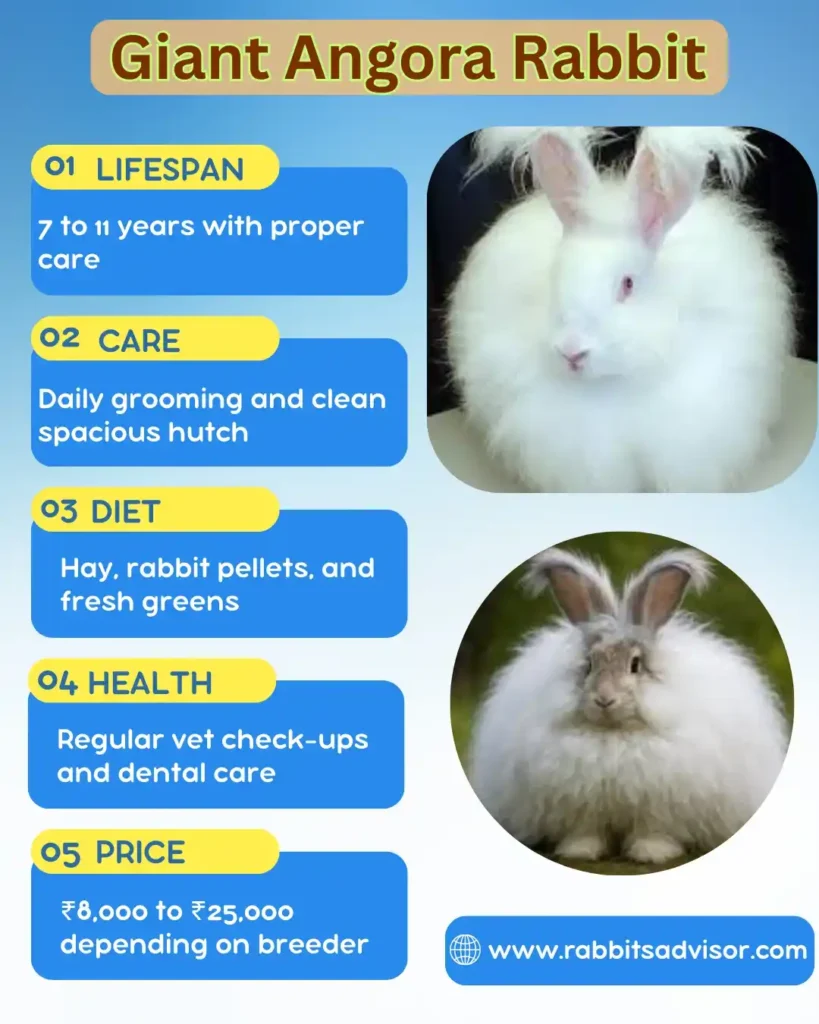
These rabbits prefer to spend much time with people and don’t like to be locking for a long time in their hutch. The Giant Angora rabbit once developed a bond with you will be a lifelong friend for you. Including children they usually get along well with everyone.
They should be continuing socialize throughout their life to help them become well-rounded and confident.
Make sure you always respect personal space of your Angora rabbit especially when it is new to your home.
Giant Angora Rabbit Lifespan
Generally, the Giant Angora rabbit can live up to 7 and 12 years. But, their life can be scaling as offering good diet and environment.
Giant Angora Rabbit Health Issues
The most serious health problem for a Giant Angora rabbit is the risk of wool block. Rabbits like to keep themselves clean and groom to make their coat in good condition like other animals.
Unlike cats who regurgitate the fur that was unknowingly swallowed but rabbits cannot do it. Due to lack of hay in rabbit’s diet the wool can form a hairball in their stomach and get struck.
Also Read: Mini Plush Lop Rabbit and its Lifespan, Size, Diet, Sale/Price, & Facts
The rabbit feels like his belly is full and stops to eat which may cause of die if not treated.
When you see the rabbit is very lazy including lack of appetite and less droppings are the symptoms of wool block. Whenever you suspect your rabbit is facing wool block make sure to take them to your nearby veterinarian to cure their problem.
All rabbits could face the problem of growing too long teeth. This problem occurs due to insufficient hay which they chew and helps them to grind their teeth naturally.
It can be very painful for rabbit if it teeth grows into jaw and face. To make sure to prevent this check your rabbit’s mouth sometimes and it eats enough hay that helps the teeth worn down.
Giant Angora wool is perfect for dying and can be making into clothes like socks and mittens.
Giant Angora Rabbit Caring Tips
Let’s see! How to keep Angora bunny looking and feeling its best?
Diet
Angora rabbits need more fiber and protein than rabbits with short hair.
Fiber makes easy to food move through the rabbit’s digestive tract. It also helps to prevent wool block.
Also Read: Checkered Giant Rabbit and its Breed, Lifespan, Size, Diet, & Facts
To meet the energy demands of growing their wool Angora need more protein. A good source of protein is pellets. Although they should not make up the majority of any rabbit’s diet.
Give a balanced diet to Angora rabbit around 70 to 80 percent hay and a maximum of ½ cup of pellets per six pounds of body weight.
Grooming
Make rabbits healthy do check and brush regularly. This helps prevent wool block, spot parasites and keep its fur clean and free of wool mats.
You should check every day your bunny’s fur for tangles and mats. Pay special attention to the backside.
Brush out the fur of your adult rabbit two times of a week with a wire-bristle slicker brush. Do it carefully that the brush bristles could not touch the bunny’s delicate skin. Instead of pulling tangles and mats just cut them out.
Trim the nails of your rabbits every 3 to 4 weeks with the nail clippers. Mostly rabbits don’t like the nail trimming. Use the right tool that can help to make it easy and faster for both.
Bath is not good for bunny. Bathing can scare bunny and can make them sick or cold. If your rabbit is old or weak and couldn’t clean itself, then use pet wipes to clean urine and poop from its fur.
Housing
Only a hutch is not enough for a rabbit. Rabbits need daily exercise and a space to run in addition to the right size hutch.
Space should be tall enough to stand up fully without touching its ear to the top.
Space should be wide enough to hop at least three times in a row.
Their living space should be big enough to stretch out fully
Regular check and clean your rabbit’s enclosure often to be sure
How Much Do These Rabbits Cost?
Giant Angoras are famous in whole world for its fur and as a pet. That is why they can be seen easily. A true Giant Angora can be so expensive because they do well in shows and produce valuable fur.
Also Read: Florida White Rabbit and its Lifespan, Size, Diet, Characteristics, Sale, & Facts
Pedigreed Angoras usually costs between $100 and $300. But pet rabbits are cheaper than show animals.
How to Breed Giant Angora Rabbits?
- Select healthy, ARBA-standard bucks and does
- Monitor heat cycles and behavior
- Record all breedings and outcomes in Everbreed
- Track coat quality in offspring using grooming logs
- Cull or pet-home rabbits that don’t meet standards
- Breeding responsibly preserves the health and function of this angora wooler breed.
Conclusion: Are Giant Angora Suitable for You?
Giant Angora Rabbits were basically bred for their commercial use of fur and big size. But many families find them very friendly and gentle pets.
Giant Angora Rabbits can grow up to 12 pounds in weight so they need large space than other average rabbits. They also require a regular grooming that can take time. Their fur can get tangled and cause of discomfort or skin problems if it is not cared.
If this article is valuable for you, then please share it along with your friends, family members, pet lovers or relatives over social media platforms like as Facebook, Instagram, Linked In, Twitter, and more.
Do you have any experience, tips, tricks, or query regarding on this? You can drop a comment!
Have a Nice Day!