As we know that German Angora rabbits are excellent rabbits. And, they are getting more popularity for their soft wool and good nature. With time, German Angora rabbit became famous with fiber lovers, breeders, and pet owners.
In this part, we will check out German Angoras their background, what they are like, how to care for them, and why they are so value.
German Angora Rabbit – Facts
| Species Name | Lagomorpha |
| Family | Angora-Kaninchen |
| Care Level | Moderate to High |
| Temperature | Moderate |
| Color Form | White, Monochromatic, Agouti |
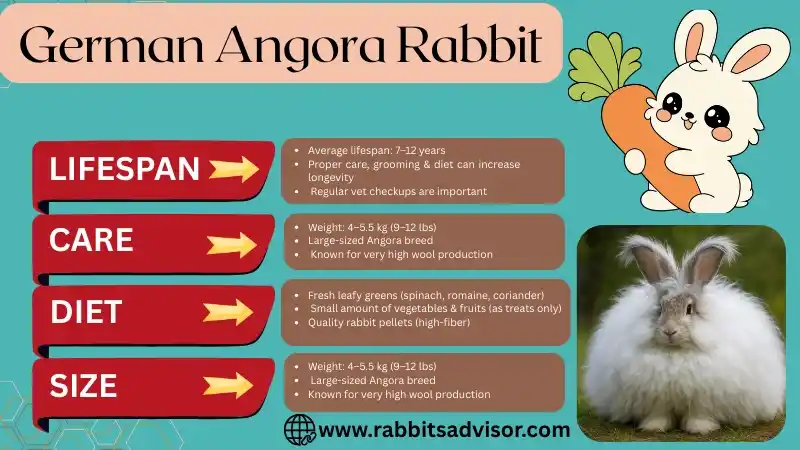
| Lifespan | 7 – 12 years |
| Size | Large |
| Diet | Veggies, fruits, rabbit pellets |
| Minimum Tank Size | 30″ X 36″ X 24″ |
| Tank Set-Up | Food, Water, Nest Box |
| Temperament | Docile, friendly, affectionate |
German Angora Rabbit Origins & History
In the 1700s these rabbits come from Ankara, Turkey and Europe. People loved them, and over time, breeders developed various Angora breeds, including English, French, Satin, Giant, and German Angoras.
Also Read: Satin Angora Rabbit and its Lifespan, Diet, Size, Color, Price, & Facts
In the 1900s, breeders in Germany worked to create a rabbit that produced excellent wool and looked the same across the breed.
The German Angora is a little different from other Angoras because it’s not officially recognized by the American Rabbit Breeders Association (ARBA).In Europe, this breed is well known and has clear breeding level.
This breed created to give a high amount of wool, so it produces more than most other Angoras.
German Angora Rabbit Physical Appearance
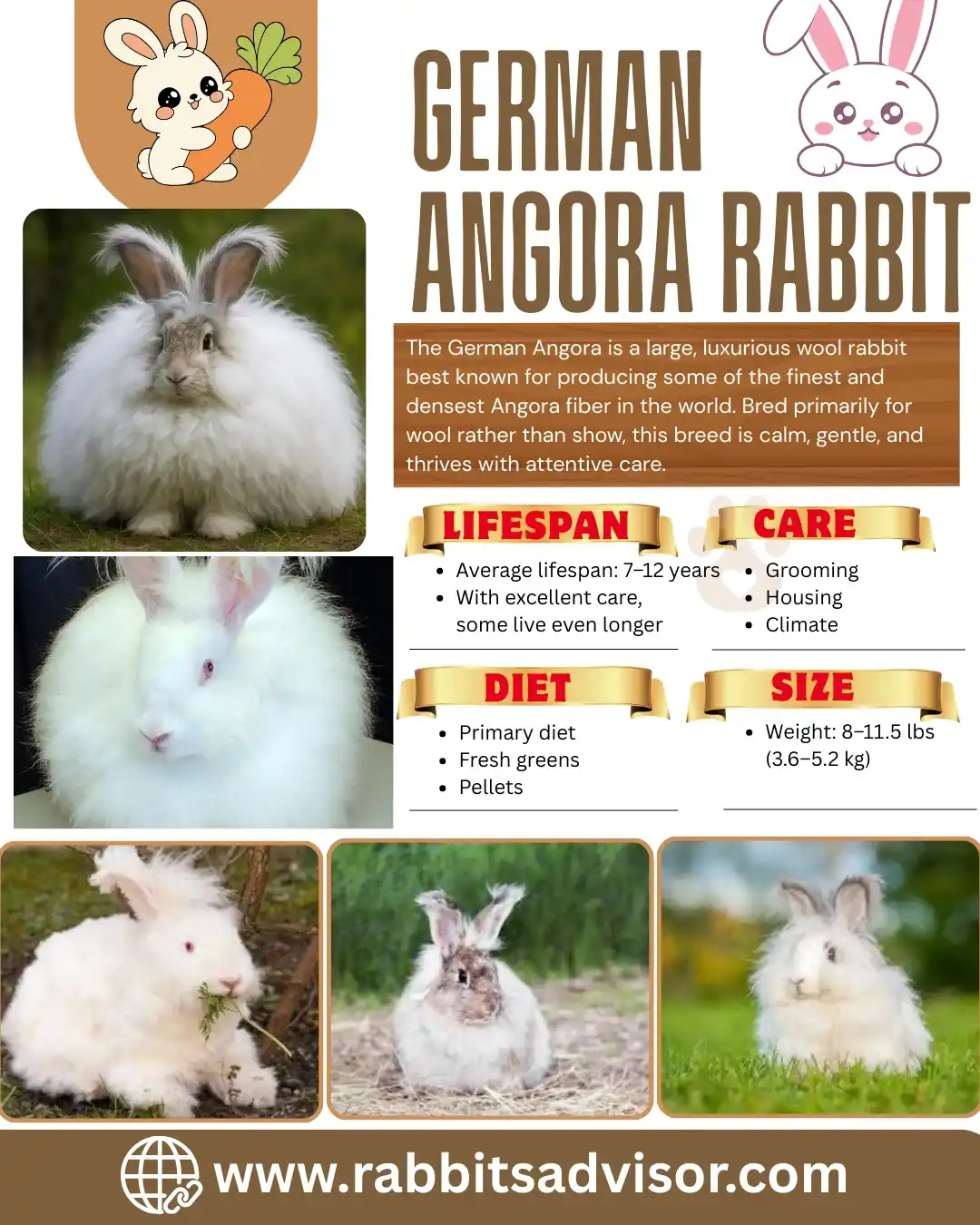
Everyone know that German Angora rabbits are medium in size and strong with a solid body that supports their heavy wool.
As per studies females usually weight about 8.5 to 11 pounds but male weight between 7.5 and 10 pounds.
They look larger than their actual size only because of their thick fur. Their wool grows over the whole body, except on the face and ear tips.
As we can see their wool is mostly white but sometimes you may see a few colored spots.
Their ears are in medium-sized that stand straight up. That is giving them a good look.
German Angora Rabbit Diet & Nutrition
This is the first thing that a good balanced diet is important for German Angoras to stay healthy and make quality wool.
Also Read: Giant Angora Rabbit and its Colors, Size, Diet, Lifespan, & Facts
As you want to grow them healthy it is important to give them good-quality pellets and fresh hay.
Then it is important they are getting nutrition by eating add fresh vegetables like carrots and leafy greens. Sometimes fruits also work good to provide them important vitamins and minerals.
Also not to forget provide fresh water at all times for their health, since it’s important for keeping them strong.
German Angora Rabbit Coat
As we know German Angoras are famous for their soft, woolly fur. Their hair is long and fine, and their coat is easier to care for than most other Angora rabbits.
Because of a non-molting gene these rabbits don’t shed. Their wool prevents matting, so regular brushing is not getting to require.
Every three months, they must be shearing, and their dense, high-quality wool is great for making thread.
German Angora Rabbit Colors
Their fur can be any color but who have ruby-eyed white (REW) is the most common. When a rabbit is colored then their undercoat is lighter and the top fur is more vibrant.
It is a fault if the color patterns as they are not accepting in breeding quality.
The German Angora has a woolly coat that can be divide and spun into soft, costly thread.
German Angora Rabbit Breeding & Reproduction
Most people know that German Angoras are normally bred in carefully managed programs that focus on wool quality, thickness and growth. They mostly breed at the age of between 5 and 7 months with males maturing a little advance.
Also Read: German Lop Rabbit and its Lifespan, Size, Diet, Care, & Facts
As it is seen that they get pregnant for about 30 to 32 days and each litter normally has 4–8 kits. German Angora’s newborn kits are born hairless and blind. But they usually seen grow quickly and start getting their first coats within a few weeks.
Responsible breeders do understand the priority of their health, preserve genetic diversity and ensure proper living conditions. Many keep careful records to track family lines and important traits over generations. Take care of their common Health Issues and Prevention.
If we are not doing proper care of German Angoras so they can face health issues same as other pets.
Regular grooming and a fiber-rich diet help prevent wool block.
If we do not proper care of teeth, they face dental problems and Give them chew toys to help keep their teeth healthy.
As we know regular vet check-ups is a key to finding and treating health problems early.
Feeding German Angora Rabbits: Best Practices
A balanced diet is very important for German Angoras’ health and their wool.
The main part of what they eat should be good-quality pellets.
Also Read: Mini Plush Lop Rabbit and its Lifespan, Size, Diet, Sale/Price, & Facts
As we all know giving Fresh hay should always be available to help them digest food and prevent wool block.
Like other rabbits fresh vegetables like carrots and leafy greens are important to provide vitamins and minerals so they could be healthy.
It will works good if you give them fruits occasionally as treats but they should only make up a small part of their diet.
FAQs (Frequently Asked Questions)
What Is A German Angora Rabbit?
Yes, it is common that mostly people know that German Angora rabbit gets knowing for its very soft and thick wool. The main reason to breed them for high-quality Angora fiber and loved by spinners, textile artists and breeders around the world.
Are German Angora Rabbits Good Pets?
A passionate owner can make German Angoras be very gentle and loving pets but they need to groom them regularly.
Can German Angora Rabbits Live Outdoors?
As per the experienced pet owners these rabbits live comfortably in cool, shaded and airy spaces. For this reason these rabbits are very sensitive pet to heat because of their thick fur. They should be keeping under roofs in hot environment.
How Long Do German Angora Rabbits Live?
As per our opinion these rabbits can live up to 7 to 12 years if they get proper care.
How Big Do German Angora Rabbits Get?
They must be weighing around 7.5–11 pounds (3.4–5 kg).
Final Remarks
As we discussed above about them these rabbits bring together history, careful breeding and fiber art. German Angoras special for both fiber and as pets as they have soft wool, relaxed temperament and unique features.
Also Read: American Chinchilla Rabbit and its Lifespan, Diet, Size, Care, and Facts
Now everyone is aware about that taking care of the German Angoras are important. If anyone wants to keep them for their wool, as pets or for breeding they remind them of generations of skilled rabbit care.
If this article is valuable for you, then please share it along with your friends, family members, pet lovers or relatives over social media platforms like as Facebook, Instagram, Linked In, Twitter, and more.
Do you have any experience, tips, tricks, or query regarding on this? You can drop a comment!
Have a Nice Day!