This breed knows as Blue Angora rabbit is one of the beautiful and unique breeds. They get love from people for their wool like fur and their calm personality.
This rabbit has a bluish grey coat. It is a favorite among lovers and wool producers.
We will discuss everything in this article about the blue angora rabbit breed, including its care, diet, lifespan, price and interesting facts
What is a Blue Angora Rabbit?
This breed is a color variation of the Angora rabbit known as the Blue Angora rabbit. It becomes famous for its long and silky wool.
Also Read: Netherland Dwarf Rabbit and its Lifespan, Care, Diet, Characteristics, & Facts
The term “blue” is not actual blue color but it refers to a grey shade. Basically,Angora rabbits came from Turkey. They are one of the domestic rabbit breeds.
According to behavior these rabbits are very gentle and social. They can become excellent pets if you provide them proper care and attention.
Blue Angora Rabbit Lifespan
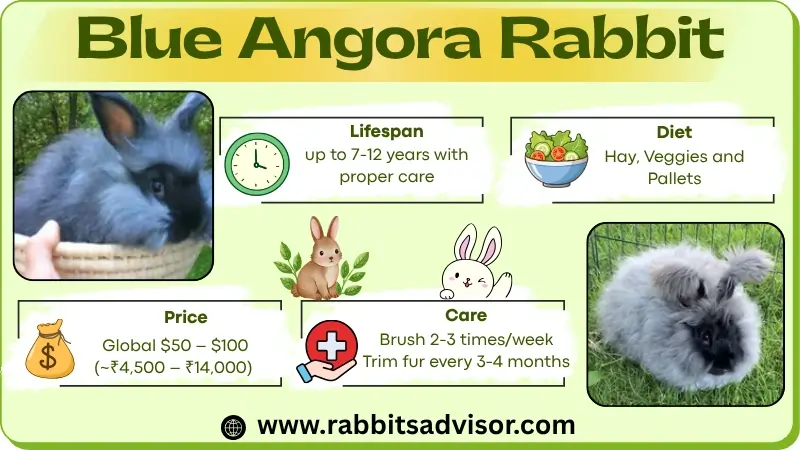
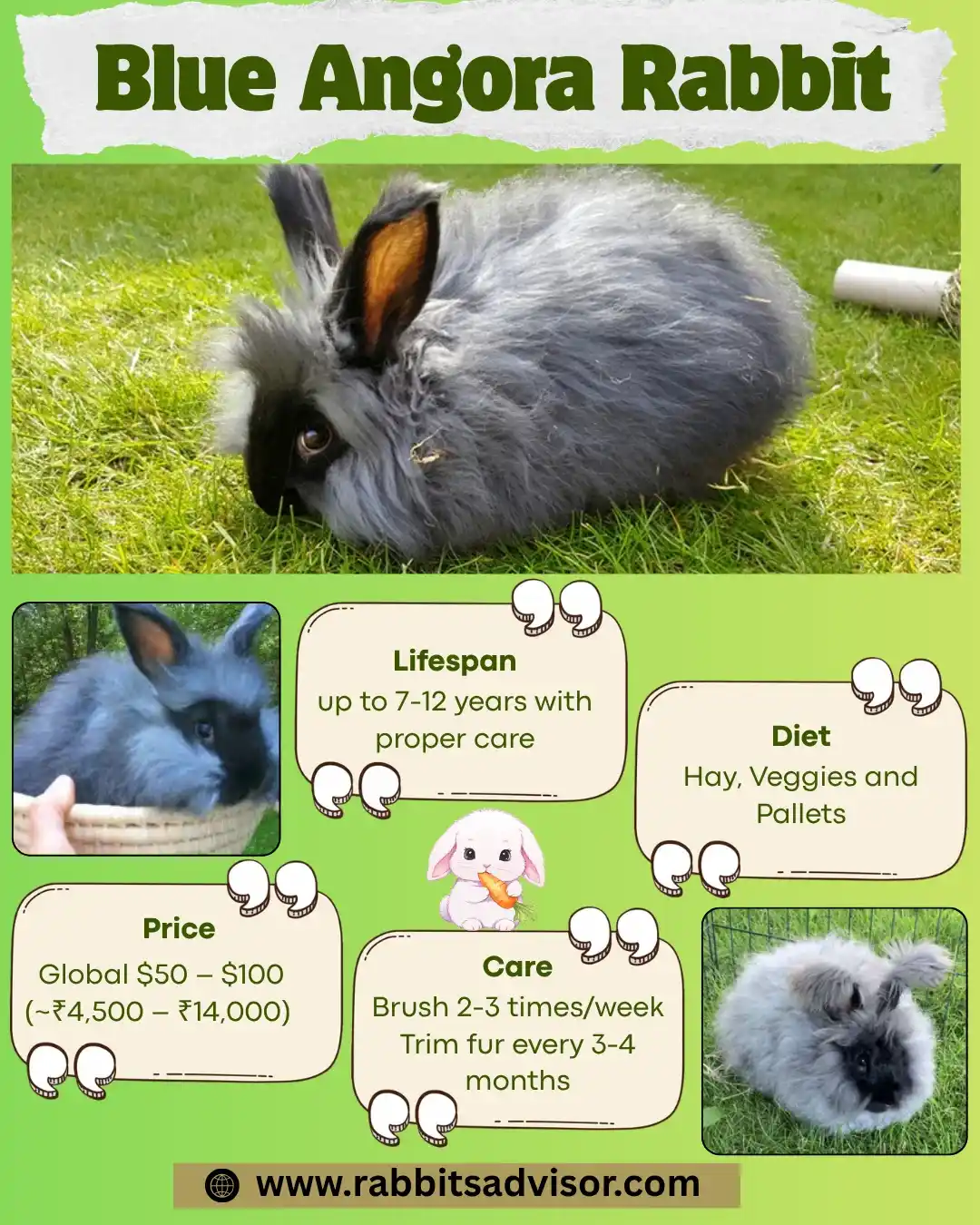
The lifespan of this Angora rabbit with a proper care is usually up to 7 to 12 years. Many live up to 8-10 years indoors. The diet, grooming and environment of your rabbit are important.
Outdoor rabbits have short lives because of predators and weather. They can have disease, gastrointestinal stasis and spinal fragility. Handle them carefully.
The regular checkups to a vetcan catch the parasites, urinary issues or heat stress early. The temperature above 80°Fis not tolerable for these rabbits.
Blue Angora Rabbit Care Essentials
It requires a commitment and grooming for taking care of this Angora rabbit. Brush them with a wide-tooth comb and slicker brush on daily basis. This prevents them from matting.
Also Read: Velveteen Lop Rabbit and its Lifespan, Size, Color, Diet, & Facts
Shave their wool if it exceeds 4 inches. Keep them in wire cages at least 4×2 with solid floors.Place them in draft-free areas so they can rest nicely.
Give them toys to chew and platforms for exercise. Using pine shavings litter-train them. Socialize them early for friendliness but supervise while they play.
Blue Angora Rabbit Diet Needs
A balanced Blue Angora rabbit diet is important. Give them timothy hay for digestion and wool health around 80%. You should add 17-18% protein pellets around 2-4 ounces daily based on rabbit size.
Some fresh greens like romaine, parsley and cilantro are good. Limit fruits to avoid obesity. Feed them with high fiber that helps to prevent hairballs. Also consider papaya enzyme supplements. Always give them water.
Blue Angora Rabbit Health Issues
Blue Angora rabbits can have health issues because of their wool. A common problem is wool block. This happens when they ingest fur while grooming. It leads to blockage. They can also have matted and skin infections if not groomed regularly.
Heat stress is a risk. It is very common due to poor care they can suffer with dental problems, parasites and obesity. You need to provide them a high fiber diet, grooming, clean housing and vet checkupsto prevent these issues.
Blue Angora Rabbit Price Range
The price of this rabbit varies. Pet quality kits start at $50 to100. Show or breeding stock with pedigrees cost $200 to 500.
Also Read: German Lop Rabbit and its Lifespan, Size, Diet, Care, and Facts
Factors like lineage, coat quality and breeder reputation that affect the price.Expect to spend $400+ on supplies, feed and grooming tools.
It cuts costs often under $50 when they are adopting from rescues as supporting ethical sourcing.
Blue Angora Rabbit Raising Tips
Start with a vetted breeder for healthy stock. Monitor molts for harvesting. Plucking is painless if done right way.
In the climate of Chandigarh use fans or frozen bottles for cooling in summers. Annual exams ensure longevity. These rabbits reward owners with affection and artisanal wool.
Is Blue Angora Rabbit a Good Pet?
Yes, the Blue Angora rabbit breed makes a pet. You must invest time in grooming and care.
👍 Pros:
Soft and beautiful appearance
Friendly and calm nature
Can be trained and social
👎 Cons:
High grooming needs
Requires regular maintenance
Not ideal for very busy owners
The people who enjoy caring for animals and have time for maintenance are best for these rabbits.
Blue Angora Rabbit Facts
This angora rabbit facts show their traits. They molt times yearly. They produce 12-16 ounces of wool per rabbit annually. This wool is prized for spinning into yarn. Unlike haired breeds their wool requires constant management.
Also Read: Mini Plush Lop Rabbit and its Lifespan, Size, Diet, Sale/Price, & Facts
These rabbits are calm and social. They bond well with owners. So, it keeps in mind always that they are sensitive to loud noises or sudden movements.
The judges give the priority of their wool density, vibrant blue shading on flanks and blue-gray eyes in shows.
Verdict Up
The Blue Angora rabbit is a luxurious breed. It is known for its coat and gentle personality. Owning one requires dedication from understanding the lifespan to maintain proper care of this rabbit.
That is why it is highly rewarding. This adorable pet can become a loving companion with the diet grooming routine and environment.
It doesn’t matter whether you like their beauty or their wool. The Blue Angora rabbit breed is an addition to any rabbit lover’s home.
If this article is valuable for you, then please share it along with your friends, family members, pet lovers or relatives over social media platforms like as Facebook, Instagram, Linked In, Twitter, and more.
Do you have any experience, tips, tricks, or query regarding on this? You can drop a comment!
Have a Nice Day!