Shaking happens often in rabbits. Every rabbit will shake at some point in its life.Sometimes the shaking is due to something like being cold or having hiccups. It can also point to a more serious problem. Rabbits are very good at hiding illness.
They often act normal when they’re not feeling well.That is why you need to pay attention to symptoms like shaking.One little shake could be a sign of somethingthis article goes over all the causes of shaking in rabbits.It helps you decide if the shaking is something to worry about.We will tell you when you should take your rabbit to a veterinarian.
A veterinarian suggests various tests, trying to determine what is wrong with the rabbit.At the end we share tips, on how to lower the chances of your rabbit shaking.We also talk about ways to support your rabbit’s health so it stays happy and strong.
What Does It Mean When a Rabbit is Shaking?
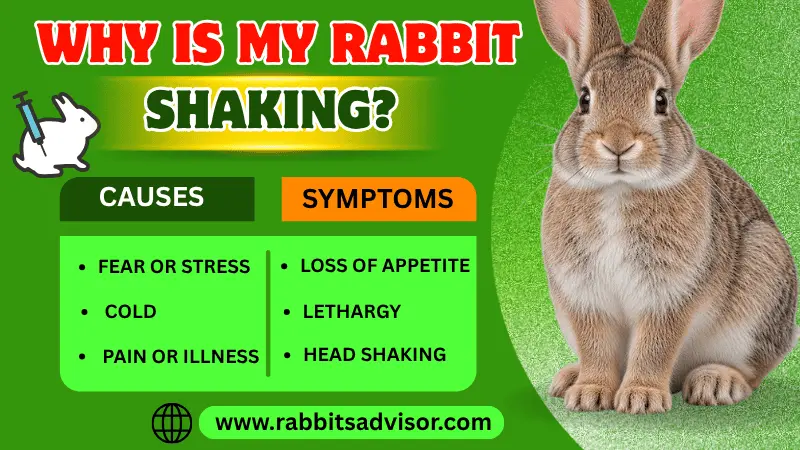
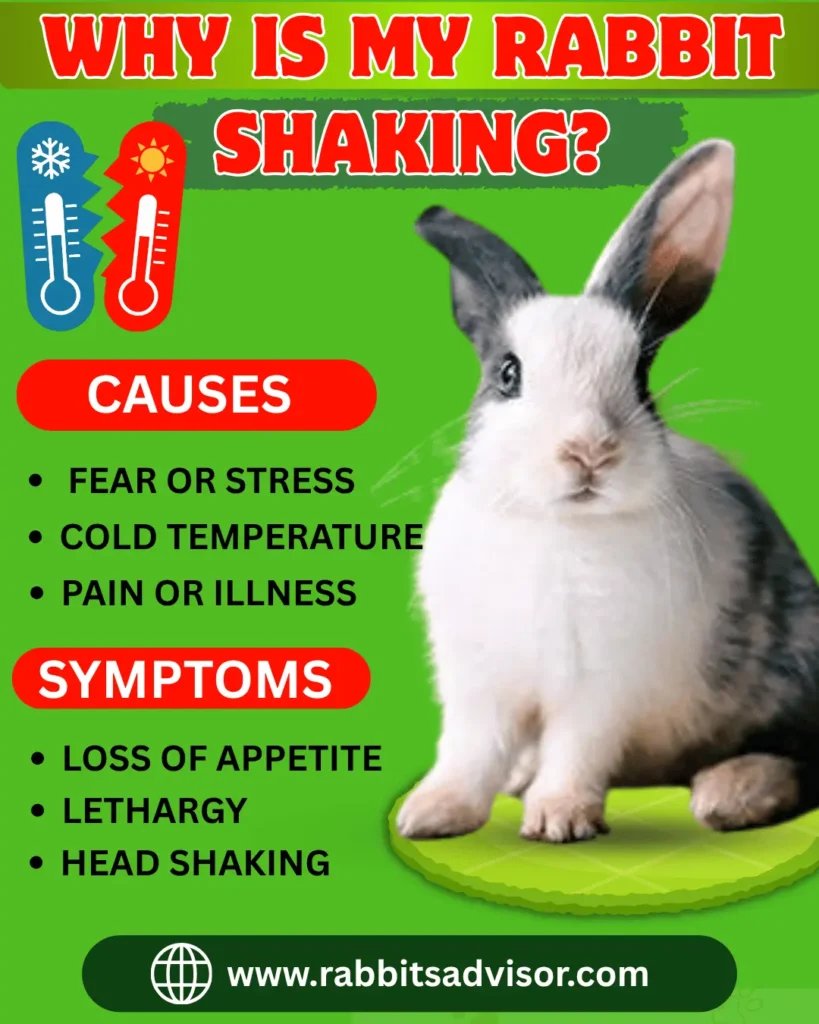
We will see your rabbit is trembling and your rabbit may be frightened stressed, cold or in pain.Sometimes this trembling or a rabbit that feels too hot can mean your rabbit has an illness.
Read More: Why Do Rabbits Grunt? Complete Guide
Watch your rabbit’s behaviour and the area, around your rabbit. If the rabbit keeps trembling. Your rabbit shows trouble breathing, weakness or no appetite call a vet who knows about rabbits.
Different Types of Rabbit Shaking
You may observe your pet rabbit shaking due to a variety of reasons. Thankfully, not all kinds of shaking in rabbits are a cause for concern. Here is a list of the different types of rabbit shaking, the normal and the abnormal.
Twitching
This is a quick and repetitive kind of shaking.Sometimes you might notice your bunny twitching over its body.At times the twitching only happens in one area.Rabbits can also twitch when they are asleep.This happens because their muscles relax and contract on their own.It is completely normal and nothing to be concerned about.
Rabbit Trembling or Vibrating
Sometimes if you watch really carefully you might spot your bunny moving over. A rabbit shivering or having a shake is something that happens naturally. Additionally, rabbits vibrate or tremble slightly during sleep.
Skin Rippling
A rabbit’s fur or skin may ripple due to small air currents, and rabbits may also ripple their fur as a reflex when they are pleased or excited.
Read More: Do Rabbits Cry? When Sad, Pain, Die, Scare & Night
The fur appears wavy and moves in a certain pattern. This is probably the rabbit version of having a shiver run up the spine, and it sometimes causes the bunny to jolt. This is also normal bunny behavior.
Convulsing
Convulsions, seizures or fits are a type of violent and irregular rabbit shaking caused by involuntary muscular contractions.
Convulsions may last for minutes and are not normal bunny behavior. If you find your rabbit lying down and shaking you should take them to see a vet immediately.
Rabbits Shaking Their Heads
Rabbits may shake their heads to show annoyance, while playing or when excited. However, it can also be a symptom of teeth or ear infections. Rabbits sometimes hold their head tilted to one side if they have an infection, but not always.
Read More: Why Are Rabbits Good Pets? Top Reasons to Love Bunny
If your rabbit keeps shaking its head from side, to side for a time that could mean something is wrong. It is best to take your rabbit to a veterinarian away.
Rabbit Head Bobbing
Rabbits sometimes bob their heads up and down. This is not something to worry about. Rabbits move their heads up and down when they are in a place especially to check how high or low things are.
They may also do this when they are happy or sleepy, the same way a human nod off while sleeping. However, frequent or prolonged head bobbing in rabbits may be a sign of illness.
Why is My Rabbit Shaking? Causes
Again, rabbits can shake for a variety of reasons. Let’s go through some of them.
Deep Sleep
Rabbits often twitch and move their legs during the dreaming phase of a deep sleep. This can happen in any sleeping position, whether they’re lying out, sprawled out, or even just sleeping in a loaf position.
Read More: Are Rabbits Smart? Understanding Rabbit Intelligence & Behaviour
You’ll also probably see some head nodding and ear twitching. I should also note that it’s a big deal if your rabbit is comfortable enough to enter a deep sleep like that while you’re around. It means he really trusts you!
Hiccups
As odd as it may sound, rabbits can get hiccups, which may cause some shakes. These are short bodily twitches that have no sounds. Hiccups are normal and usually go away on their own within a few minutes, but if they don’t, or they come back frequently, consult a vet.
Overexcitement
Rabbits are emotional creatures, much more complex than we give them credit for. They feel complex emotions like affection and grief and feel them very deeply.
Read More: Do Bunnies Smell? A Complete Guide to Rabbit Odors
Rabbits can shake from feeling strong emotions like excitement and happiness. Bum twitches and tiny shakes are quite common for over-excited rabbits and are thought to be a lazy form of a binky.
High Stress/Fear
Rabbits get stressed easily, and this can cause a lot of problems for them. A rabbit can become shaky because of a high fear or stress situation. Sometimes, this can make a rabbit angry and aggressive, which, on top of shaking, may also result in lashing out.
Either way comforting your rabbit to rabbit down is your priority. Put rabbit in a peaceful environment and give rabbit a place to hide or be alone. If anger is the problem rabbit will likely need time alone to cool off.
Overheating/Heat Stroke
Believe it or not, rabbits do much better in cooler temperatures than in the heat. That means they can overheat easily. In some cases, that causes shaking and panting.
Often, they shake to try and cool themselves off, but that doesn’t mean you shouldn’t help them, as rabbits are susceptible to heatstroke.
Here are some other heatstroke symptoms to look for in rabbits:
- Drooling
- Panting
- Lethargy
- Hot and red ears
Read More: Do Rabbits Eat their Own Poop? Understanding Cecotropes
If you see rabbit shake because of heat give rabbit a spray bottle of water or an ice pack to cool rabbit down. If rabbit shows any symptoms you should go to a vet.
Ear Mites/Infection
Constant head or ear shaking is usually the symptom of ear mites or an ear infection. This comes along with other symptoms, like:
- Constant scratching
- Red, itchy ears
- Scaling on the inside of the ears
Particularly with ear infections, your rabbit’s equilibrium may be off, meaning some unbalanced movements and shaking.
Whatever the case, your rabbit will need veterinary attention for proper treatment. It may also be ideal to quarantine your rabbit for a while, especially with ear mites. You don’t want them to infect other animals.
Seizure
Seizures and epilepsy are pretty rare in rabbits. It’s well-known that blue-eyed, white-haired rabbits are more prone to it, but it’s still common enough in all rabbits to mention. The symptoms of a seizure are the same in rabbits as in other animals and even humans. Strong, uncontrollable convulsions that come on quickly.
Read More: Do Rabbits Get Hiccups? Causes, Symptoms and Treatment
A stroke is very similar but is usually preceded by wobbly movements, eye twitching, and other stroke symptoms. Seizures and strokes can happen for reasons, like injury, poisoning, getting older or genes. If your rabbit has one keep them calm and still. Then call a vet away. However, both are usually fatal.
Neurological Issues
Constant head twitching and shaking can mean neurological problems, especially when in combination with impaired movement and head tilt. Generally, this problem is posed by brain damage or parasitic infection that known as E. Cuniculi.
WhyIs My Rabbit Shaking and Laying Down?
If your rabbit is shaking and lying down, then it might be getting scared stressed, cold or tired. Once you got these signs, then your rabbit is in pain having digestive issues, too sick with something serious.
If your rabbit is not moving much looks weak ‘s breathing fast is grinding its teeth or is not eating take your rabbit to the vet right away.Rabbits usually try to hide when they’re sick so if your rabbit is shaking a lot or is, in a strange position you should not ignore it.
Why Is My Rabbit Shaking And Breathing Fast?
We have noticed that your rabbit is trembling and breathing rapidly; andso, it might be scared or distressed.And The rabbit could also be too hot, in pain or facing a health problem.
Read More: Can Rabbits See in Colour Like Humans Do? Facts & Myths
Fast breathing along, with shaking might mean an emergency especially if the rabbit looks weak or has trouble breathing.Stay calm don’t handle the rabbit more than needed and get in touch with a veterinarian who knows about rabbits away. Quick care can make a difference.
Can You Prevent My Rabbit From Shaking?
As there are many causes which may lead to your rabbit shaking, the best thing to do is maintain their overall health as best you can. Here are some ideas to help you prevent shaking in your rabbit:
Diet: maintain a proper diet which has sufficient amounts of quality feed and introduces fruit and vegetables. However, do not overfeed on the latter and ensure they are types beneficial to rabbits such as leafy greens. Also, they need a constant supply of fresh hay,
Hygiene: if a rabbit’s hutch or cage is not cleaned regularly and thoroughly, it can lead to disease and stress.
Remove stressors: if there are stressors in your rabbit’s life, the family cat constantly bothering them for example, remove them.
Temperature: ensure the rabbits are kept away from draughts and out of direct sunlight.
Handling: don’t over-manipulate your rabbit as this can stress them out. Let them come to you and don’t pick them up if they obviously don’ want to be handled. Also, do not lay them on their back until they paralyze (known as trancing). It is dangerous and can cause a lot of anxiety.
Verdict Up
Appreciate why your rabbit shakes help you notice problems early. Fear, cold temperatures, excitement, pain and illness can make a rabbit shake. Therefore, always think about your rabbit’s surroundings and any other physical signs.
Read More: Do Rabbits Fart? Causes, Smell, and Health Signs
Provide an environment keep an eye on eating habits and watch for changes, in rabbit behavior. Importantly you should get help when a rabbit shakes a lot or shows other worrying symptoms. Your rabbit’s safety depends on spotting warning signs and acting fast.
If this article is valuable for you, then please share it along with your friends, family members, pet lovers or relatives over social media platforms like as Facebook, Instagram, LinkedIn, Twitter, and more.
Do you have any experience, tips, tricks, or query regarding on this? You can drop a comment!
Have a Nice Day!