
Today we are discussing about the Thymoma in Rabbits are pets that can live long and healthy lives if you take good care of them. Like all animals they can get sick. One of the major health problems that can affect the rabbits is known as thymoma.
This is a tumor that grows on the chest. It can cause big problems because it can push on the lungs, heart or big blood vessels.
It is very important to know the signs of thymoma how it is diagnosed and how it is treated. This way you can get your rabbit to the vet quickly. Help your pet feel better.
What Is Thymoma in Rabbits?
Let we are talk about thymoma is one types of tumors that generally grows from the cells of the thymus gland. The thymus gland occurs in the chest of the rabbit. It helps to keep their system strong especially when the rabbits are young in age.
Also Read: Rabbit Head Tilt and its Causes, Symptoms & Treatment
In rabbits thymomas usually grow slowly. As they become bigger, they can push on the organs that are nearby and they make it hard to take breathe to the rabbits.
Even all the thymomas are not generally aggressive they can become very dangerous if you do not treat them.
Causes of Thymoma in Rabbits
We do not know exactly what causes thymoma in rabbits. Some things might contribute to it such as:
- Getting older
- Genetics
- cell growth in the thymus gland
- Things in the environment that we do not know about
Different infectious diseases, thymoma is not infective and they cannot spread from one rabbit to another rabbit.
Which Rabbits Are at Risk?
We do not know exactly what causes thymoma in rabbits. There are some things that might contribute to it such as getting genetics, cell growth in the thymus gland and things in the environment that we do not know about. We really do not know if some rabbit breeds are more likely to get thymoma than others.
Symptoms of Thymoma in Rabbits
The symptoms of thymoma in rabbits occur slowly as the tumor grows. Because the tumor is in the chest many of the symptoms of thymoma in rabbits are related to breathing problems.
Also Read: Rabbit Pregnancy Signs and Symptom
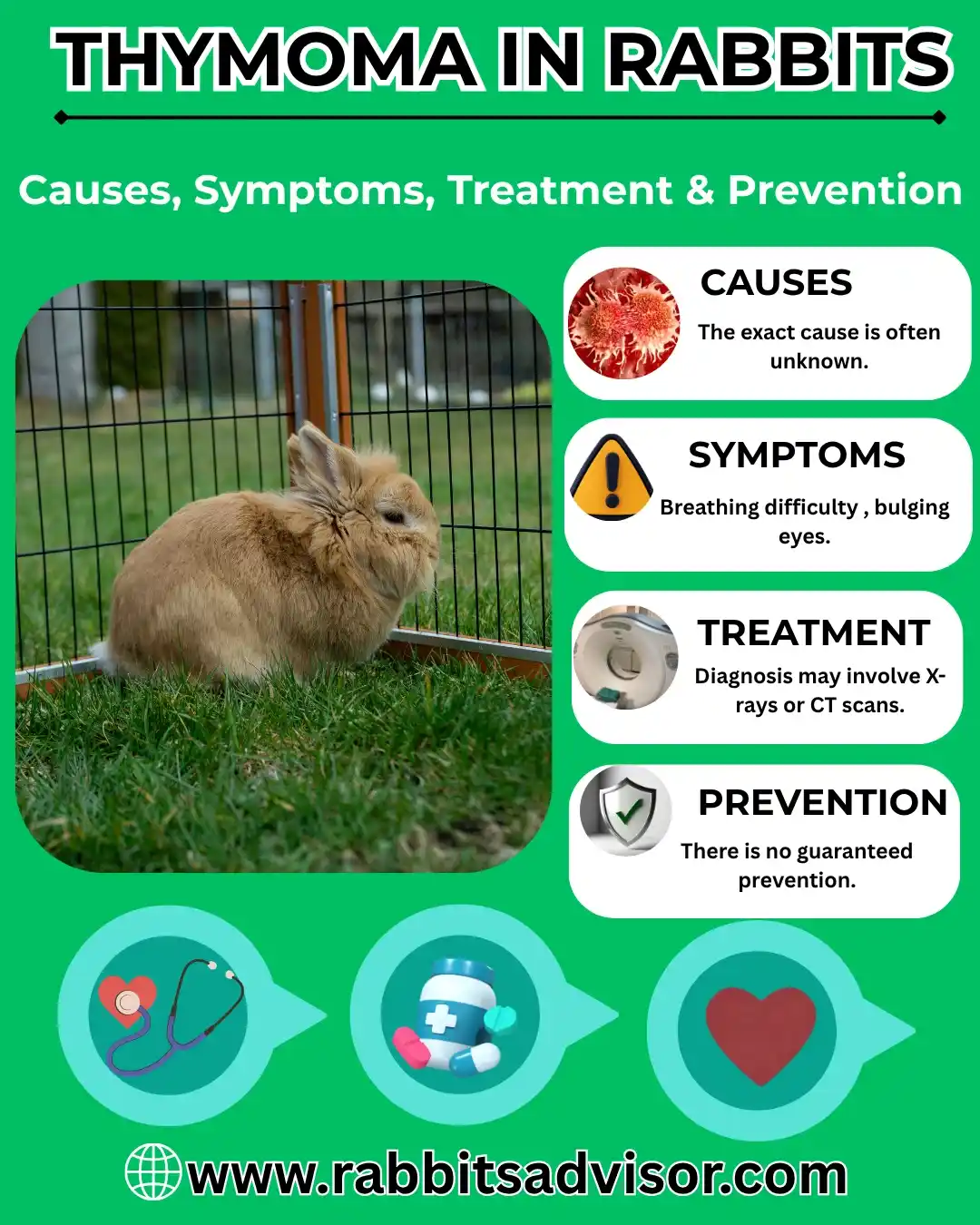
Common symptoms of thymoma in rabbits include:
Difficulty Breathing
Let we talk about Labored or fast breathing is one of the common signs of thymoma in rabbits. Rabbit’s with thymoma may breathe with a mouth in severe cases, which is think about a medical emergency like the rabbits.
Bulging Eyes, Also Known As Exophthalmos
Pressure within the chest can reduce blood drainage from the head causing one or both eyes ofthe rabbits to bulge. This is a sign often associated with thymoma in rabbits.
Reduced Activity
Rabbits with thymoma may become less active spend time resting and showreduced interest in exercise.
Loss of Appetite
Breathing difficulties and discomfort can cause rabbits with thymoma to eat less leading to weight loss in the rabbits.
Weight Loss
Chronic illness often results in weight loss in rabbits despite normal food availability.
Exercise intolerance.
The rabbits with thymoma may tire quickly during activities or avoid moving altogether
Bluish
Tongue; in cases of thymoma poor oxygen levels may cause a bluish discoloration of the mucous membranes indicating an emergency for the rabbits.
Some common symptoms of thymoma in rabbits include these problems.
How Can Thymoma Be Diagnosed?
Physical Examination
The veterinarian evaluates breathing, heart sounds, body condition and eye appearance of the rabbits.
Also Read: Rabbit Diarrhea and its Causes, Prevention, and Treatment
Chest X-rays
Radiographs can reveal a mass in the chest. Assess its effect on the lungs and heart of the rabbits.
Ultrasound
Ultrasound imaging helps determine the size and characteristics of the tumor in the rabbits.
CT Scan
As we know Computed tomography provides detailed images and is many times used to plan treatment like the rabbit.
Rabbits especially if surgery or radiation therapy is being think about for the rabbits.
Fine Needle Aspiration or Biopsy
According to many reports veterinarian will perform these steps for diagnosing thymoma inrabbits. They will take a physical examination of the rabbits and may recommend several diagnostic tests for the rabbits.
Treatment Options Available For Thymoma In Rabbits
The appropriate treatment for rabbit for thymoma depends on therabbit’s health, tumor size and available veterinary resources.
Radiation Therapy
Radiation therapy is one of the commonly recommended treatments for thymoma in rabbits. Itcan significantly reduce the size of the tumor. Improve breathing and comfort for the rabbits.
Many rabbits with thymoma respond well to planned radiation treatments.
Surgery
As we know Surgical removal may be think about in selected cases of thymoma in rabbits. However, because the thymus is located near organs and blood vessels surgery can be technically challenging and may not be fit like every rabbit with thymoma.
Supportive care
Supportive treatment for thymoma in rabbits may include:
- Oxygen therapy
- Nutritional support
- Pain management
- Anti-inflammatory medications when appropriate
- Stress reduction
Therefore, supportive care improves comfort and quality of life for the rabbits especially while awaiting treatment for thymoma.
Prognosis for Thymoma in Rabbits
The prognosis for thymoma in rabbits varies depending on:
Also Read: Rabbit Pregnancy Test and Diagnosis
- Tumor size
- Stage at diagnosis
- Overall health of the rabbits
- Treatment chosen for the rabbits
Rabbits with thymoma treated early particularly with radiation therapy can experience a good quality of life for months or even years. Delayed diagnosis generally leads to a favorable outcome because of progressive compression of the chest organs, in the rabbits.
How Do You Home Care Affected Rabbit?
You can help your rabbit to feel better by providing these things:
- Keeping them in a environment that is stress free for the rabbits
- Making sure they have plenty of hay and clean water
- Watching their breathing every day
- Giving them leafy greens and a balanced diet
- Not letting them get too hot
- Giving them medicine exactly as the vet says
- Taking them to all their follow-up vet appointments
We can notice any breathing problems or if your rabbit is not eating you must be telling the vet away.
Can Thymoma Be Prevented?
We do not know how to stop thymoma because we do not know what create it. If you catch it quick the treatment is more likely to work. So, it is very important to take the rabbit to the vet if the rabbits are middle aged or older in age.
If you notice any of these symptoms you should take your rabbit to the vet:
- Bulging eyes
- Breathing problems
- Not wanting to eat
- Losing weight
FAQs (Frequently Asked Questions)
Final Notes
Today we are discussing in this articles Thymoma in rabbits is a serious health problem that mostly affects middle aged and older rabbits. It grows in the chest. Can make it hard for the rabbit to breathe. If you notice any symptoms, such as bulging eyes breathing problems or weight loss you should take your rabbit to the vet away.
Also Read: Ear Canker in Rabbits and its Symptoms, Treatment, & Prevention
The vet will do some tests, such, as chest X rays or ultrasound to diagnose thymoma. Then they will recommend the treatments such, in which might the radiation therapy is included, surgery or supportive care.
If you take your rabbit to the vet regularly and catch thymoma early you can help your pet to feel better and live a longer and healthier life.
If this article is valuable for you, then please share it along with your friends, family members, pet lovers or relatives over social media platforms like as Facebook, Instagram, Linked In, Twitter, and more.
Do you have any experience, tips, tricks, or query regarding on this? You can drop a comment!
Have a Nice Day!


